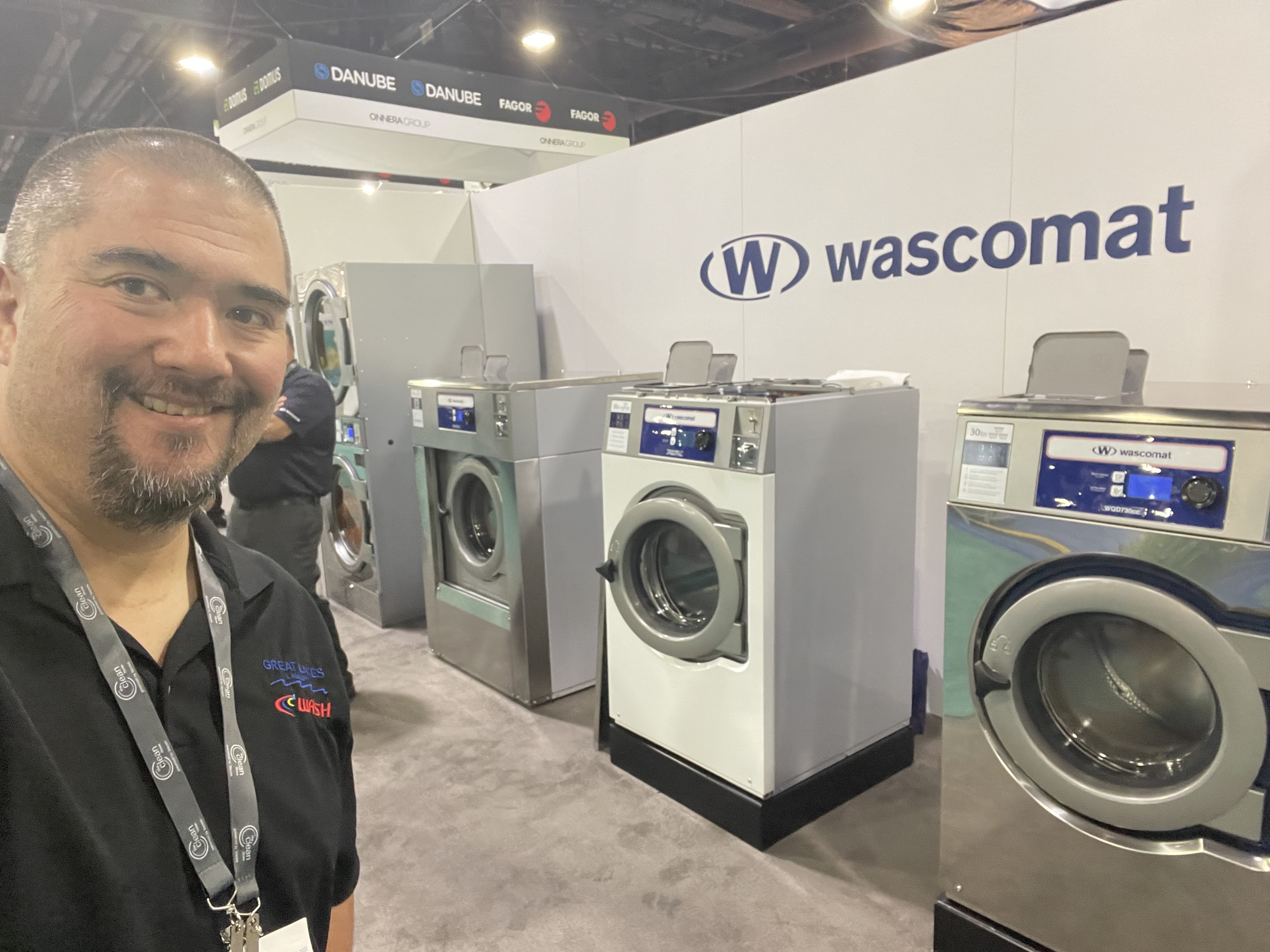
I never intended for my blog to be an "Ask Ev" type of format, however I received an interesting email from two different people asking the same question on "g force." One person was building a laundry room in a remodeled hotel and someone else interested in building a laundromat.
They were getting quotes from several companies on equipment. They noticed that the quotes all had "400g" in them where mine had "200g." My prices was several tens of thousands less than the other quotes. They wanted to know what the differences were between 200g and 400g and what "g" meant. When I asked why they were interested in 400g washers their response is below and my response back to them.
I've obviously changed the names.


I've obviously changed the names.
From: An Interested PartySent: WednesdayTo: meSubject: Re: one question
My Response:
Hi Interested Party,
The answer to your question about 400g soft mount machines vs 200g hard mount machines is; yes they do pull put more water but it is a bit more complicated than that.
Laundry equipment can be divided into typically two different ways:
a. large chassis (like in a laundromat)
b. small chassis (like in a home or sometimes a laundromat)
and:
a. soft mount and
b. hard mount
A typical standard hard mount laundromat washer large chassis machine spins the clothes out at 100g (for years companies talked about Revolutions Per Minute but all the machines spin out at 800-1,000 RPM now so to be different everyone talks about G force or "g").
The manufacturers did national studies on how much water spun out of clothes at the different G forces.
I included the charts on the 40lb washers to illustrate the information below.
I included the charts on the 40lb washers to illustrate the information below.


For example:
If you put 40lbs of clothes into a standard hard mount 100g 40lb washer, after it is done spinning 98% of the water is still in the clothes, making the entire load weigh about 78lbs. In other words you have to get 38lbs of water out in the dryer. To do that takes about 32 minutes.
Most hard mount machines are now standard 200g. If you put that same 40lb of clothes into a 40lb washer you will have 74% of the water remaining in the clothes for a weight of 70lbs. You have to get 30lbs of water out and that takes about 24 minutes.
You save 8 minutes of drying time.
That means less natural gas and electricity used and the customer gets done faster, which can help you put more customers through your store.
That means less natural gas and electricity used and the customer gets done faster, which can help you put more customers through your store.
For a 300g 40lb washer leaves 67% of water (67lbs weight) and to get that 27lbs dry takes about 22 minutes. A 400g (highest available currently) washer leaves 26lbs of water in the clothes and that takes 21 minutes to dry.
Notice the diminishing returns the higher up in G Force you go.
Here is the catch:
A 100g washer and a 200g washer are essentially the same price.
Depending on the distributor and brand of machines,to go from a 200g machine to a 400g machine you could add up to 33% more on the price per washer. If you are looking at a $200,000 laundromat equipment invoice, that bill just became $260,000!
Depending on the distributor and brand of machines,to go from a 200g machine to a 400g machine you could add up to 33% more on the price per washer. If you are looking at a $200,000 laundromat equipment invoice, that bill just became $260,000!
Is the extra money worth it?
Answer: It can be.
Answer: It can be.
Depends on the goal of the owner and the laundry room or laundromat where the machines are being installed.
You might be thinking that sounds like a salesy wishy washy (no pun intended) answer. Explain!
You might be thinking that sounds like a salesy wishy washy (no pun intended) answer. Explain!
If the machines are going into a laundry room vs a laundromat it can make a big difference.
Lets start with a laundromat.
The average person doing laundry in a laundromat is probably not going to the notice the difference between towels after a 200g spin and a 400g spin.
People load their clothes into the washer and then leave to sit in the car or come back many minutes after their laundry stops washing. They throw it into the laundry cart and then throw it into the dryer. Sometimes it might not be the same person taking laundry out of the washer as the person throwing it into the dryer.
The average person doing laundry in a laundromat is probably not going to the notice the difference between towels after a 200g spin and a 400g spin.
People load their clothes into the washer and then leave to sit in the car or come back many minutes after their laundry stops washing. They throw it into the laundry cart and then throw it into the dryer. Sometimes it might not be the same person taking laundry out of the washer as the person throwing it into the dryer.
People have a pattern to doing their laundry. If they know it takes 36 minutes to wash clothes and 36 minutes to dry those clothes that is what they are sticking with because that is what they have done for years. I've had many customers tell me emphatically "I've been doing my laundry for -- years and I know how to do my laundry and don't tell me how to do it."
There are two times I've seen people break their patterns, one is new dryers and the other is going from top loaders to front loaders. If people see new dryers they will eventually adjust their drying time, and any time they save they give credit to the new dryers not the higher speed washers. A store switching from top loaders to front loaders the customers will give credit to the washers because front loaders spin lots more water out and they have to adjust their laundry method to account for the new style of washer.
There is a third time people change their patterns and will give credit to the washers. That is when an existing laundromat with 25-35 year old washers in it, upgrades to go to 400g soft mount washers. Those customers would notice a difference between towels spun out in a 100g washer and a 400g washer!
11 minutes less drying after spinning out in a 400g washer vs the old 100g washer is as significant as the 8 minutes saved going from 100g to 200g washers. My question to anyone looking to go from 200g to 400g is if the extra money you spend worth the extra three minutes your customer saves?.
There is a third time people change their patterns and will give credit to the washers. That is when an existing laundromat with 25-35 year old washers in it, upgrades to go to 400g soft mount washers. Those customers would notice a difference between towels spun out in a 100g washer and a 400g washer!
11 minutes less drying after spinning out in a 400g washer vs the old 100g washer is as significant as the 8 minutes saved going from 100g to 200g washers. My question to anyone looking to go from 200g to 400g is if the extra money you spend worth the extra three minutes your customer saves?.
What if it is a brand new laundromat, should you do 400g machines right away?
You could...but...
You could...but...
I suggest saving the money and do not go with washers above 200g.Saving the extra 2-3 minutes on drying between a 200g machine and a 400g machine doesn't equal the extra years of having to pay off the loan for the equipment.
If you can get a screaming deal on a 400g machine then go for it, but typically you can't get a 400g machine for the price of a 200g machine.
If you can get a screaming deal on a 400g machine then go for it, but typically you can't get a 400g machine for the price of a 200g machine.
Moving to a staff laundry room like at a hotel.
Higher speed washers really make sense in hotels, long term care facilities, or any other place where the same few washers and dryers are constantly running.
A laundromat can spread the work load amongst several washers and dryers, but a hotel with a waterpark attached might only have two or three washers and the same amount of dryers.
Higher speed washers really make sense in hotels, long term care facilities, or any other place where the same few washers and dryers are constantly running.
A laundromat can spread the work load amongst several washers and dryers, but a hotel with a waterpark attached might only have two or three washers and the same amount of dryers.
The staff washing the towels will definitely feel the difference between 200g and 400g spins because it is the same people handling the towels all the time.
More importantly is the higher speed washers will add positively to their thru put.
More importantly is the higher speed washers will add positively to their thru put.
By way if example, if their washers take 30 minutes to wash and the dryer takes 32 minutes to dry and the staff starts laundry at 6am and typically does 16 loads a day, very quickly they will have wash backed up waiting for a dryer.
If they upgrade from a 100g machine to a 400g machine they will save 11 minutes off drying time. Add that up over 16 loads and they will have saved almost three hours of labor pay and time! Perhaps they can increase the amount of loads per day to fill in the now empty three hours?!
If they upgrade from a 100g machine to a 400g machine they will save 11 minutes off drying time. Add that up over 16 loads and they will have saved almost three hours of labor pay and time! Perhaps they can increase the amount of loads per day to fill in the now empty three hours?!
So there you have my general explanation of why you would need 400g vs 200g vs 100g.
Laundromats it is nice to have if you WANT but you don't NEED it.
Busy laundry rooms I would say you NEED it.
Busy laundry rooms I would say you NEED it.
Thank you for the opportunity to explain this..
You probably learned more about washers than you ever wanted to know after this email!
Everet Kamikawa “A Heck of A Nice Guy" |